


The three largest towns in the Kathmandu Valley are historically centered on their respective Durbar squares. Durbar, which translates to “Royal,” refers to the squares that sprang up around the erstwhile royal palaces and a number of significant temples and shrines, connected by an open public area. They were and still are the focal point of city life. Bhaktapur Durbar Square, located in the western part of the city, is not heavily incorporated into daily life. This magnificent plaza, which served as the Malla kingdom’s capital until 1769, is a walking museum in and of itself.

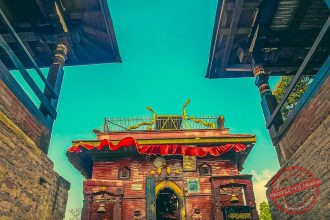
With weird blank gaps destroying the once-masterful composition, Victorian drawings reveal that it was previously teeming with monasteries, temples, and aesthetic buildings, almost one third of which were destroyed in the great earthquake of 1934. However, this square still features stunning palaces, pagodas, temples built in the Shikhara style, as well as Buddhist monasteries. The architectural jewel of Bhaktapur is Layaku ( Durbar Square). One of the seven UNESCO World Heritage Sites is this one. The excellence of the Middle Ages can be felt.

Compared to those in Patan and Kathmandu, Bhaktapur’s Durbar Plaza is smaller. A pair of lion statues can be seen on the left as one enters Durbar Square through the enormous white gate, purportedly guarding one of the entrances to the royal compound. Between them are two magnificent stone carvings from 1701 A.D. that depict Lord Bhairab, a ferocious manifestation of Lord Shiva, and Goddess Durga, a terrifying manifestation of the Goddess Parvati. The poor sculpture allegedly had his hands amputated later to stop him from making more copies of his masterpieces.

The four holiest Hindu pilgrimage sites—Gopi Nath, Kedarnath, Rameshwar, and Badrinathare represented by a cluster of temples to the Right (South) while approaching the Durbar Square from the main gate or in front of these statues of Ugrabhairab and Ugrachandi. For people who couldn’t afford to visit the ancient places, the Malla kings built these temples. At the entrance to the National Art Gallery, which is located on the center north side of the square, there is another pair of lion-statue and stone statues of Hanuman, who is revered for his valour and devotion, and Narsingh, who is a manifestation of the Hindu God Vishnu. For its unique collection of Buddhist Paubha paintings, palm leaf texts, as well as metal and stones, the gallery is worthwhile a visit.